Sea Alarm granted observer status at HELCOM
 Sea Alarm are delighted to have been granted observed official observer status at HELCOM, which was agreed at the Helsinki Commission meeting in Helsinki on 4-5 March 2010.

Sea Alarm are delighted to have been granted observed official observer status at HELCOM, which was agreed at the Helsinki Commission meeting in Helsinki on 4-5 March 2010.
 Sea Alarm attended the 12th HELCOM RESPONSE meeting on 17-19 February in Helsinki. During this meeting the Response Group approved a formal HELCOM recommendation on wildlife preparedness and response, prepared by Sea Alarm, Estonia and WWF Finland.
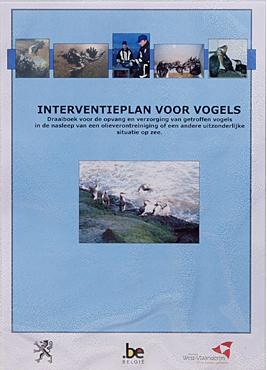
Sea Alarm has been invited to assist the Belgian authorities to set up and run an exercise to test the Belgian Oiled Bird Response Plan and in particular the role of the Wildlife Rescue Centre Ostend (WRCO). It is the second time that the plan will be tested and the second time that Sea Alarm will be involved in the design of the exercise.
 Sea Alarm will continue to assist the Netherlands in 2010 with maintaining their national preparedness for oiled wildlife incidents. An important activity scheduled for this year is a tabletop exercise to test the function of the key roles in the plan’s crisis committee, which is responsible for setting up and running the temporary oiled wildlife rehabilitation centre during an incident.

Since EMPOWER membership was opened in November 2009, applications to join the network are starting to roll into Sea Alarm’s mailbox.
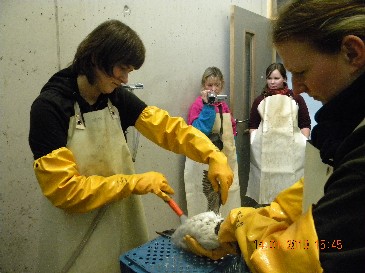 The Weidefeld Tierschutzzentrum (animal welfare centre) recently had the opportunity to send two of its staff (Katrin Umlauf, director and Katharina Stockem) to Wildlife Rescue Centre Ostend (WRCO) to improve their hands on skills in rehabilitation of oiled birds.
 Authorities in Estonia, Finland and Sweden have launched the EnSaCo Oil Spill Project, which aims to strengthen cross-border oiled wildlife and shoreline response, for easier transfer of resources between countries during an incident.
On December 16 last year a delegation from Lower Saxony paid an informal visit to the Netherlands to discuss planning for oiled wildlife response. The three person German delegation, all working for the Animal Health and Veterinary Task Force, was led by Josef Huesmann, who is responsible for developing an oiled wildlife response plan for Lower Saxony. Its mission was to learn more about the recently agreed Dutch response plan for oiled wildlife and from the representatives from Rijkswaterstaat who developed that plan.
 A list and description of Important Areas for the Conservation of Seabirds (marine IBAs) in Spain has been recently published by SEO/BirdLife (Spanish Ornithological Society) as an important delivery of an EU LIFE Project that started in 2004. The Spanish initiative ran in parallel with a sister LIFE Project in Portugal, carried out by the local BirdLife partner SPEA (Portuguese Society for the Protection of Birds), which also culminated in the publication of a marine IBA inventory.